Vampires: Monsters, Immortality, and the Stories We Tell
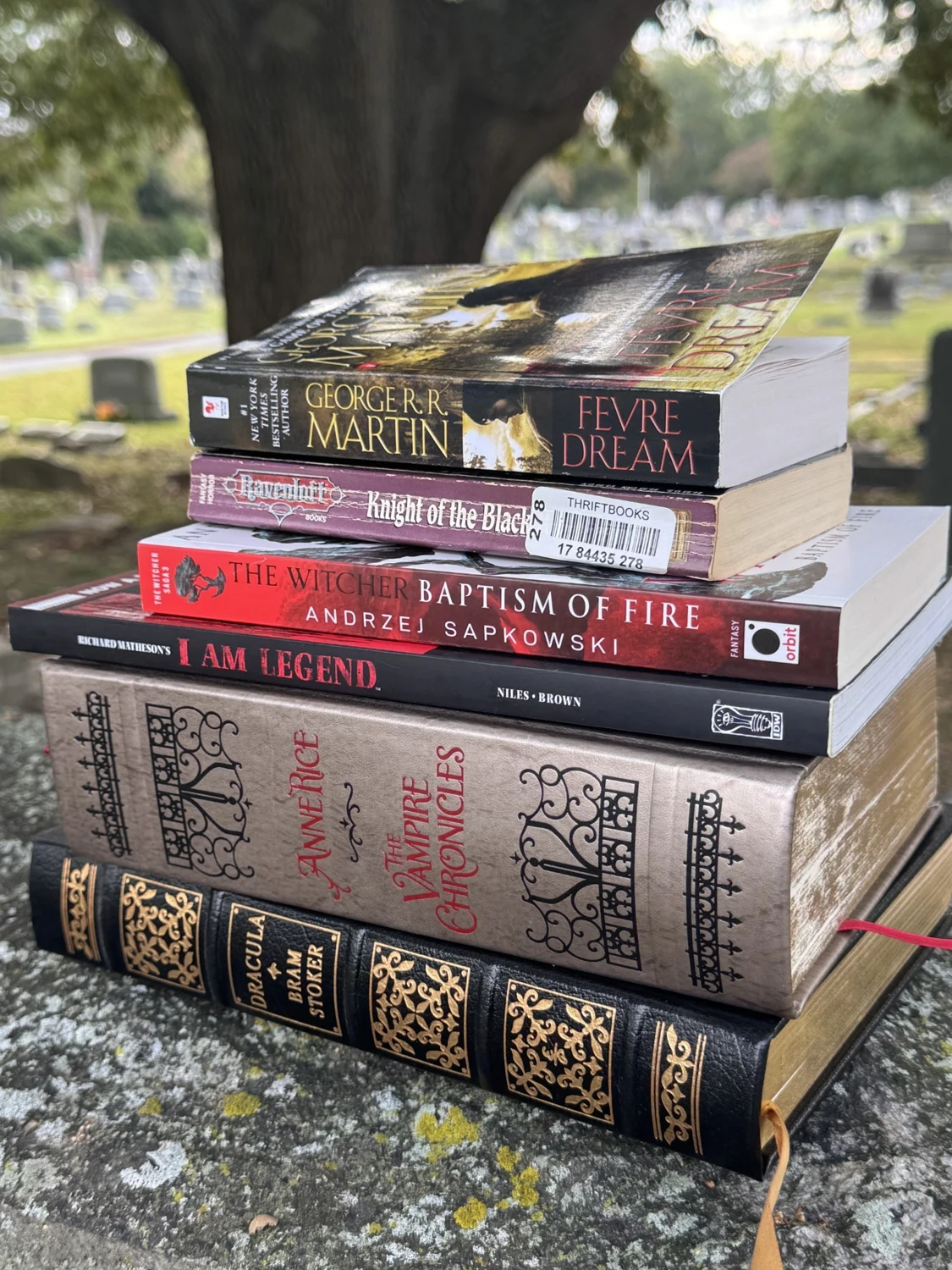
There are certain monsters that never seem to go away. Werewolves, ghosts, zombies, and things that go bump in the night have all had their moments, but vampires seem to have a particular staying power.
Maybe it's the immortality, or the blood. Maybe it's the idea of something that looks human, talks like a human, and might even act like a human, but is fundamentally something else. Or maybe everyone just wants to stay young and powerful forever.
Whatever the reason, vampires have been a fixture of literature for a very long time. And what's interesting to me is how much they've changed. We've gone from the terrifying creature lurking in a castle to the tragic immortal, the sympathetic monster, and occasionally even the hero.
So, for Halloween, I pulled a few vampire books off the Oak Grove shelves. Some are classics, some are personal favorites, and one features a character who isn't a vampire at all, but who I think could take one in a fight.
Dracula: Respecting the Original
Let's start with the obvious one: Bram Stoker's Dracula. This might be the most boring book I've ever read. I know that's probably not the best way to introduce one of the most influential horror novels ever written, but I found it an absolute slog to get through. Yet, I think it's a book worth reading. Not necessarily for entertainment, at least not for me, but almost as a textbook on vampire mythology.
Dracula is an epistolary novel, told through journals, letters, newspaper clippings, and other documents. We follow Jonathan Harker as he travels to Transylvania to help a mysterious count purchase property in England. Gradually, Harker realizes that his host is a monster and that he himself is a prisoner. Eventually, Dracula makes his way to England, where Harker, Mina, Van Helsing, and their companions must figure out what they're facing and how to stop him.
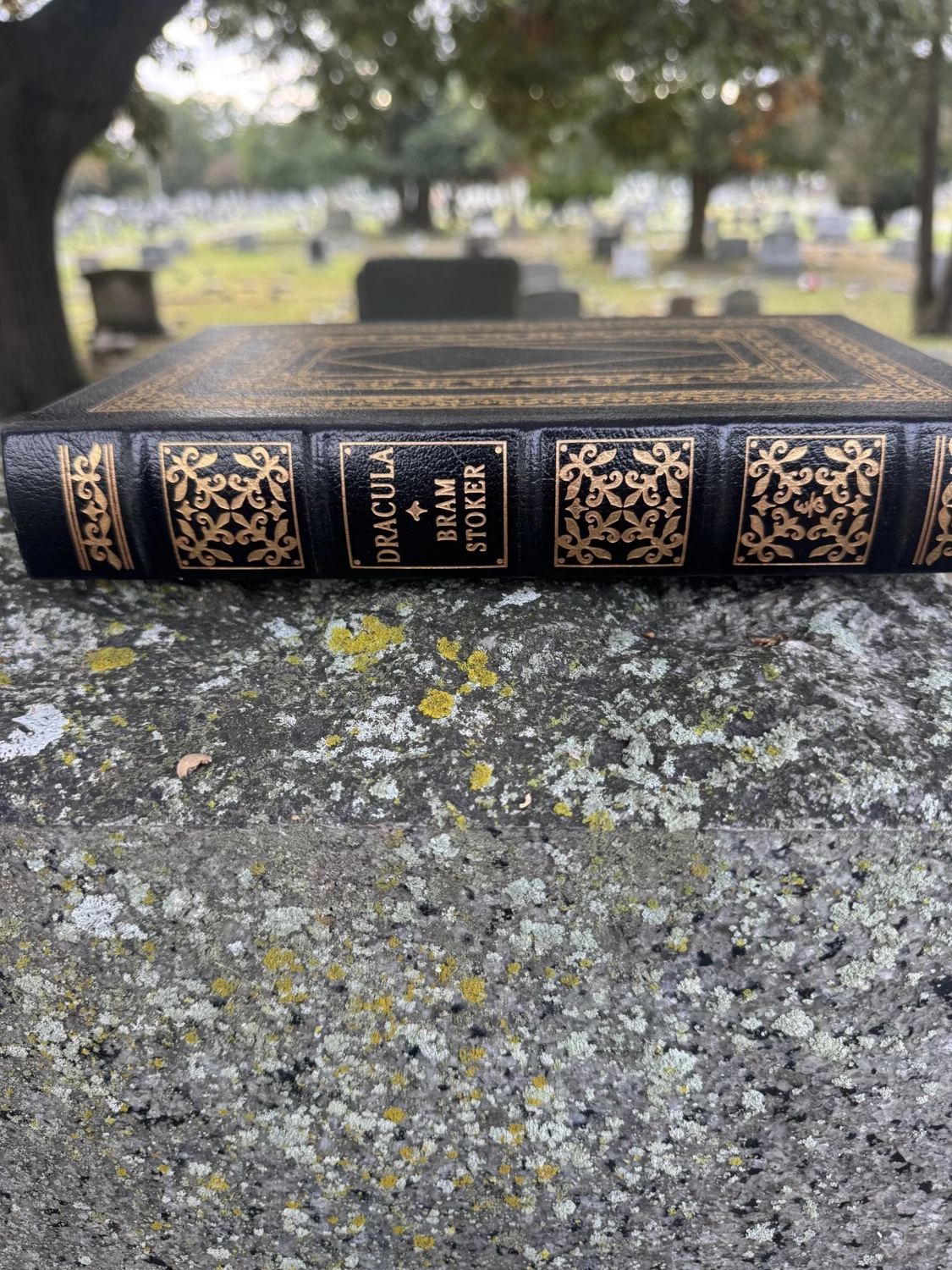
The interesting thing is how much of our modern understanding of vampires comes together in this one book. Dracula gives us the bats, the wolves, the garlic, the coffin. The monster can use minions like rats to see; he can turn into mist; he casts no reflection in the mirror. He can be killed with a stake through the heart, or decapitation, or, and this seems very 1800s, a sacred bullet. The book also says a vampire must be invited into your home.
That last one has always struck me as particularly interesting. You can lock your doors against a monster, but what happens when the monster can convince someone to open them?
I also wonder whether our familiarity with vampire lore actually works against the novel. When Jonathan Harker arrives in Transylvania, he doesn't know what Dracula is. He doesn't understand the warnings, the strange behavior, or the danger he's walking into. But we do. We're reading his account already knowing the answers, watching him ignore enough warning signs to fill another book.
There's also a detail that surprised me. Sunlight doesn't actually kill Stoker's Dracula. It limits his abilities, but he can move around during the day. The idea of vampires bursting into flames in the sunlight is something that developed later. Apparently, even vampires have accumulated a few new rules over the years.
Dracula, Mina Harker, Van Helsing, these characters themselves have taken on lives of their own, appearing in countless adaptations, reinterpretations, and entirely new stories.
I can't personally recommend Dracula as a pleasure read. I didn't enjoy it. But I respect it enormously for what it contributed to literature and to the mythology that followed.
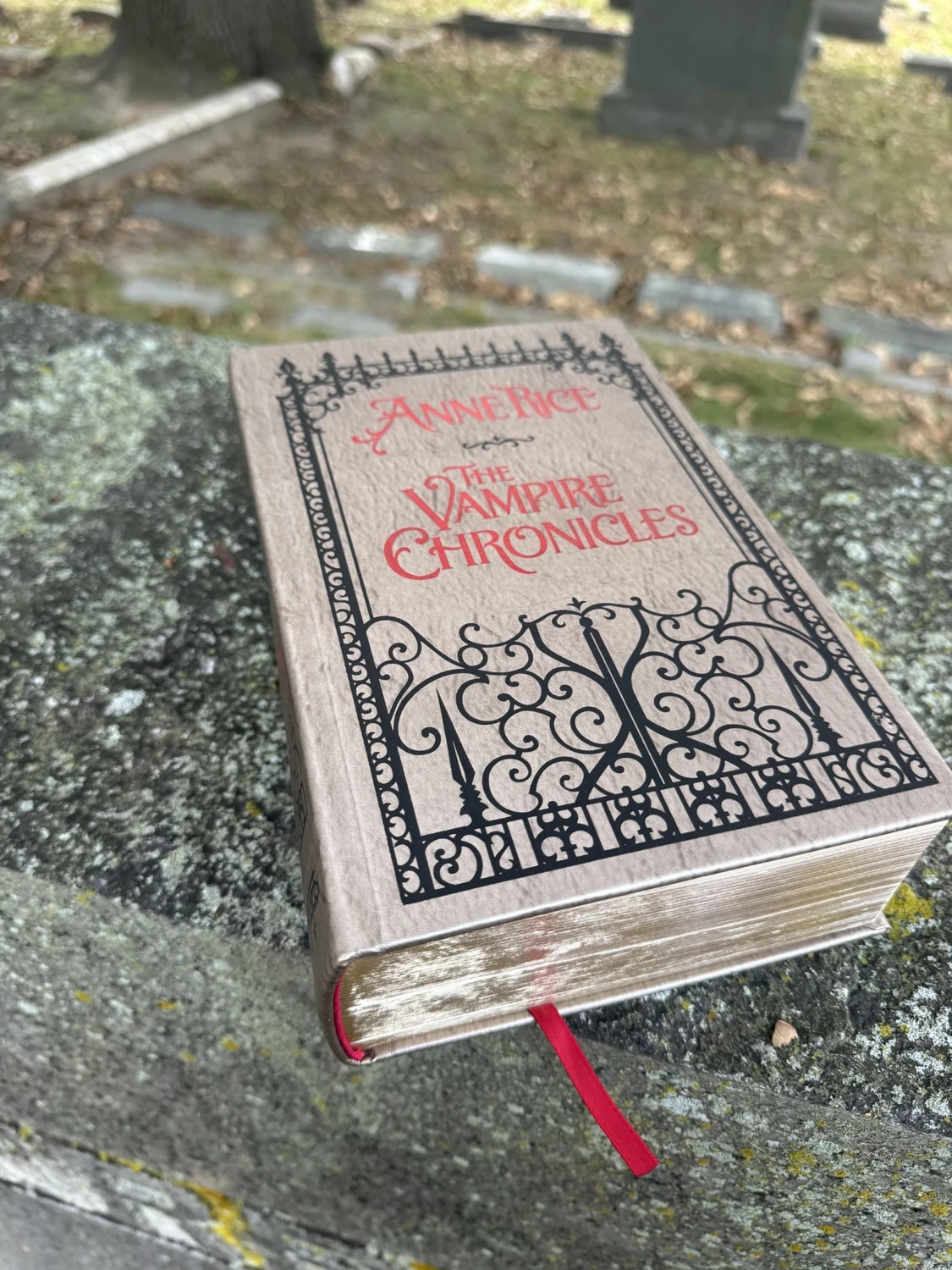
Anne Rice: Inside the Monster's Head
Where Dracula was a slog, Anne Rice's Vampire Chronicles are fun. Sure, they are dark, bloody, and occasionally ridiculous, but fun. I think the biggest difference is perspective.
Stoker shows us the vampire as something to fear. Rice asks us to consider what it might actually be like to be one. What would it mean to live forever? To watch everyone you knew grow old and die? To keep loving people when you already know how those relationships will end? How do you reconcile your humanity with the fact that your survival depends on feeding on someone else?
We begin with Interview with the Vampire, in which Louis tells the story of his existence alongside Lestat, the vampire who created him, and Claudia, who remains physically a child while growing older in experience and understanding. Their search for others of their kind takes them from Louisiana to Paris, but finding more vampires doesn't necessarily mean finding answers.
Then we get The Vampire Lestat, where Lestat tells his side of the story, and, unsurprisingly, Lestat has a few things to say about Louis's version of events. We follow Lestat's human life, his transformation, and his search for the origins of vampires. Eventually, he decides immortality really needs a career as a rock star. Because apparently living forever wasn't dramatic enough.
The Queen of the Damned expands the mythology even further, bringing ancient vampire history into the modern world with consequences for vampires everywhere. Then the series just keeps going. There are body swaps, encounters with the Devil, ancient vampires like Armand and Marius, ghosts, witches, and eventually an entirely new understanding of where vampires came from and what their future might look like.
These books do not suffer from a shortage of ideas. Rice also develops a much more elaborate supernatural hierarchy where age and bloodlines matter. Power grows over centuries, and the abilities of an ancient vampire can be dramatically different from those of a newly created one. Even sunlight becomes a different proposition depending on how old and powerful a vampire is.
But for me, Rice's most important contribution is that she allows the monster to tell the story. We're inside the vampire's head, listening to the loneliness, guilt, vanity, self-justification, and occasional moments of genuine compassion. We understand these characters. Sometimes we even like them. But then they'll do something absolutely monstrous, reminding us exactly what we've been sympathizing with.
I enjoyed the Interview with the Vampire movie, and I think the television adaptation is pretty good, too. But the books are great. Something about spending that much time inside these characters' heads makes the whole thing work.
With Dracula, I respected what the book accomplished. With Anne Rice, I actually enjoyed the journey.
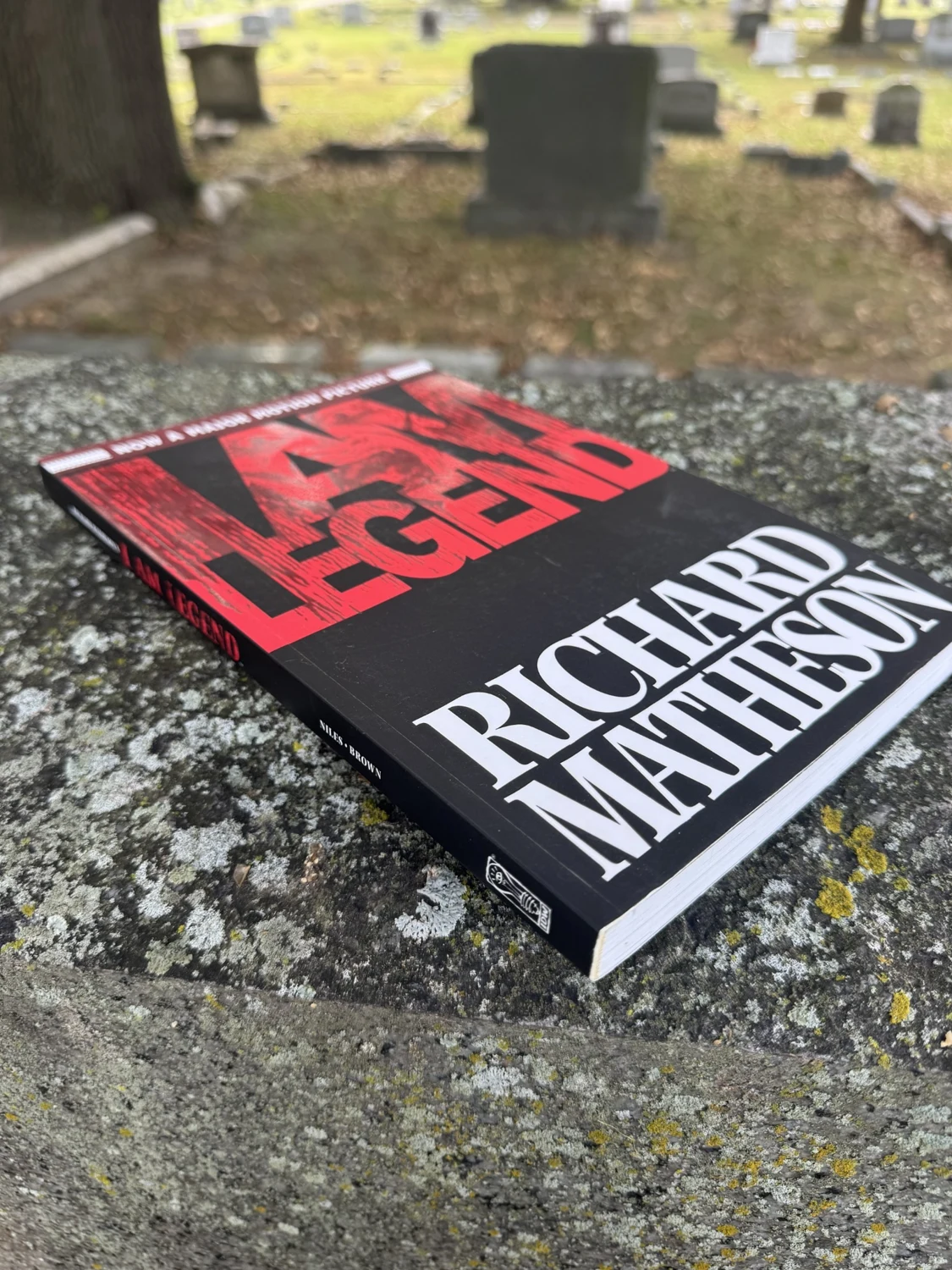
I Am Legend: When the Monster Becomes Normal
Richard Matheson's I Am Legend takes the vampire story in an entirely different direction. Instead of one monster hiding among humanity, what happens when vampires become the dominant society? What happens when the last human being is the thing everyone else fears? The human becomes the monster.
I love that idea. I actually encountered I Am Legend through the graphic novel adaptation, which I thoroughly enjoyed. I still haven't read Matheson's original 1954 novel, something I intend to correct.
I wish the Will Smith film had followed the original story more closely. Because for me, the most interesting part isn't simply the idea of surviving in a world overrun by vampires. It's the reversal of perspective.
For centuries, we've told stories about humans being hunted by monsters. Matheson asks what happens when the monsters inherit the world, build their own society, and begin to see the remaining human as the unnatural thing.
Who gets to decide what a monster is, and what happens when that decision depends entirely on which side of the story you're standing? It's a fascinating premise, and one that takes vampire fiction beyond supernatural horror into something much more philosophical.
Regis: The Monster Who Chooses Not to Be One
One of my favorite vampires in fantasy literature comes from Andrzej Sapkowski's Witcher novels. Emiel Regis Rohellec Terzieff-Godefroy. I'm going to call him Regis.
Regis first appears in Baptism of Fire, the third Witcher novel, published in 1996, long before the video games or television adaptation brought these characters to a much wider audience. He's an ancient, extraordinarily powerful vampire who is also a barber-surgeon, an educated man, an excellent conversationalist, and one of the most civilized people Geralt encounters on his travels.
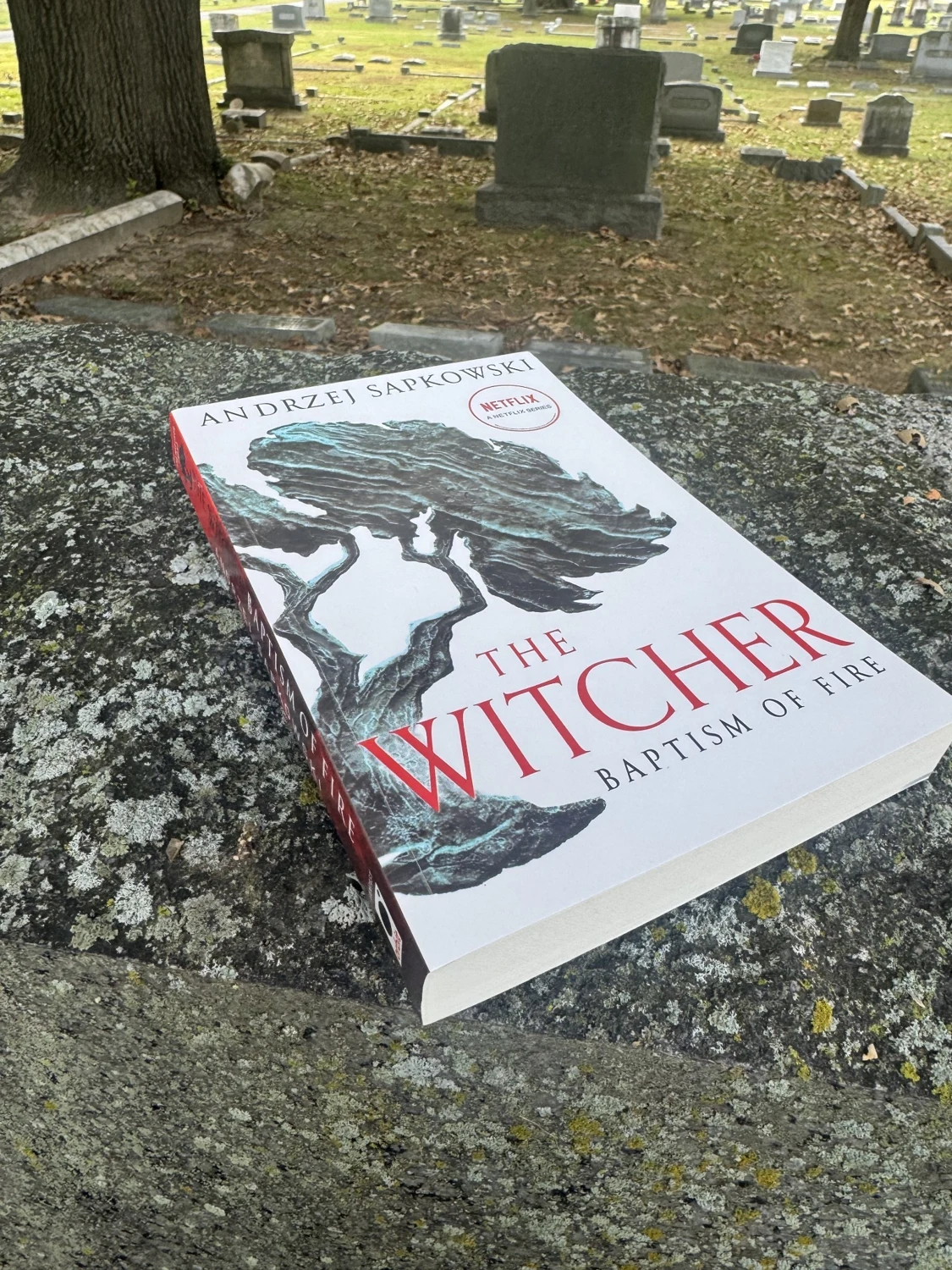
Regis joins Geralt, Dandelion, and their companions on their journey, and he quickly becomes one of the most interesting members of the group. Part of what makes him fascinating is that he's given up drinking blood. Not because he's lost his powers. Not because he's somehow stopped being a vampire. He knows exactly what he is. He remembers what drinking blood did to him, and he's made a conscious decision to leave it behind.
There's a wonderful scene involving a woman accused of witchcraft. A priest demands a trial in which someone must reach into a fire, retrieve a red-hot horseshoe, and carry it without being burned. Regis simply walks over, picks it up, and carries it to the priest, with no burned hand or grand announcement, just a vampire quietly rescuing someone from people who believe they're hunting monsters.
That moment captures what I love about Regis. He doesn't deny his nature. He accepts it, understands it, and chooses how to live with it. This illustrates one of my favorite themes in The Witcher. The creatures everyone calls monsters aren't necessarily the worst things in the world. Sometimes the real monsters are people who are absolutely certain they know what evil looks like and determined to impose that understanding on everyone around them.
Regis may be a vampire, but he's also one of the best people Geralt has at his side, and unlike some of the tragic vampires we've encountered elsewhere, Regis doesn't spend all his time lamenting what he is. He simply tries to be better.
Lord Soth: A Monster to Fight a Monster
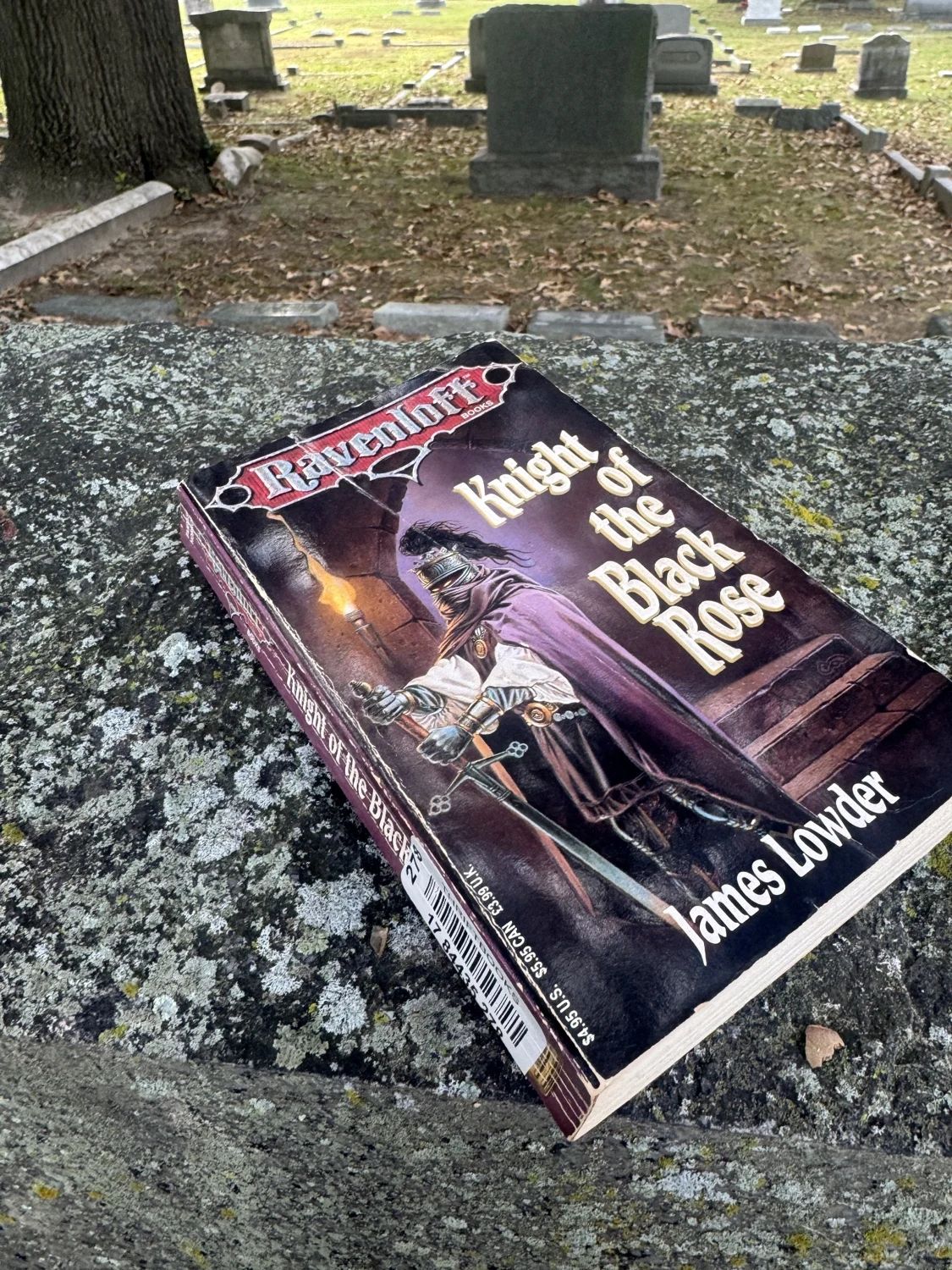
Now for someone who isn't actually a vampire. Lord Soth, the Knight of the Black Rose. Soth is a death knight from the Dragonlance setting, a cursed undead warrior in black armor with enough supernatural power to make most creatures think twice about challenging him.
In James Lowder's Knight of the Black Rose, Soth is transported from Krynn into Ravenloft, the Gothic horror setting best known for Count Strahd von Zarovich. Strahd, of course, is an ancient and extraordinarily powerful vampire. Now, when you put a death knight like Soth in the same story as a vampire lord like Strahd, I think it's reasonable to expect a fight.
Soth certainly demonstrates what he's capable of. At one point, he fights one of Strahd's red dragons. He kills it with his bare hands. His bare hands. Yet, somehow, we never get the knock-down, drag-out confrontation between Soth and Strahd that I wanted.
There's actually an interesting reason for that, both within the story and behind the scenes. In the novel, Strahd is clever enough to recognize that Soth isn't someone he particularly wants to fight. Soth, meanwhile, is pursuing his own objectives and has little reason to waste his considerable power fighting a vampire who might be useful to him. Strahd relies on manipulation rather than brute force, exploiting Soth's weaknesses to maneuver him toward a fate of his own making. But the real-world story is even more interesting.
When TSR was developing Ravenloft as a full campaign setting in the early 1990s, Dragonlance was already enormously popular. Lord Soth was one of its most recognizable villains. So TSR brought him into Ravenloft.
Margaret Weis, who created Dragonlance with Tracy Hickman, was not particularly happy about it. At a DragonCon panel, she explained that she believed TSR had borrowed Soth specifically to attract established Dragonlance readers to the newer Ravenloft line. Essentially, take a character people already love, drop him into a new setting, and hope his fans come along for the ride. It's not a particularly subtle marketing strategy, but I can see the logic.
James Lowder, who wrote Knight of the Black Rose and also edited the Ravenloft fiction line, offered some additional perspective. He explained that the intention was to explore Soth without fundamentally changing him. In fact, Lowder eventually wrote the novel himself because other proposed versions altered Soth's character too dramatically, and Soth was never supposed to remain in Ravenloft permanently.
He eventually became the darklord of Sithicus, a domain that reflected his own crimes and failures, before returning to Krynn in Spectre of the Black Rose. So while I would have liked to see Soth and Strahd tear Castle Ravenloft apart, the crossover's real purpose was something else entirely.
TSR wanted to introduce Dragonlance readers to Ravenloft, and the writers had to balance two established, powerful villains without destroying either character, which is understandable. But you put a death knight who can kill a dragon with his hands into a castle with a vampire lord, and I still think it's fair to expect a little more property damage.
Knight of the Black Rose remains a fun crossover, and Soth earns his place in my vampire reading list. Even if he's technically here to fight them.
Further Reading: Lord Soth and Ravenloft
The circumstances surrounding Lord Soth's appearance in Ravenloft are almost as interesting as the novels themselves. For two firsthand perspectives on the crossover:
Margaret Weis at DragonCon (1998) — In this panel discussion, Weis explains her objections to Soth's move into Ravenloft and argues that TSR used the character to attract established Dragonlance readers to the newer setting.
An Interview with James Lowder — Fraternity of Shadows — The author of Knight of the Black Rose discusses the editorial decisions behind Soth's appearance, the disagreements surrounding his use, and why he intended Soth's time in Ravenloft to be temporary.
Together, these accounts offer an interesting look at the creative and commercial considerations involved when a popular character moves between established fictional worlds.
Fevre Dream: Vampires on the Mississippi
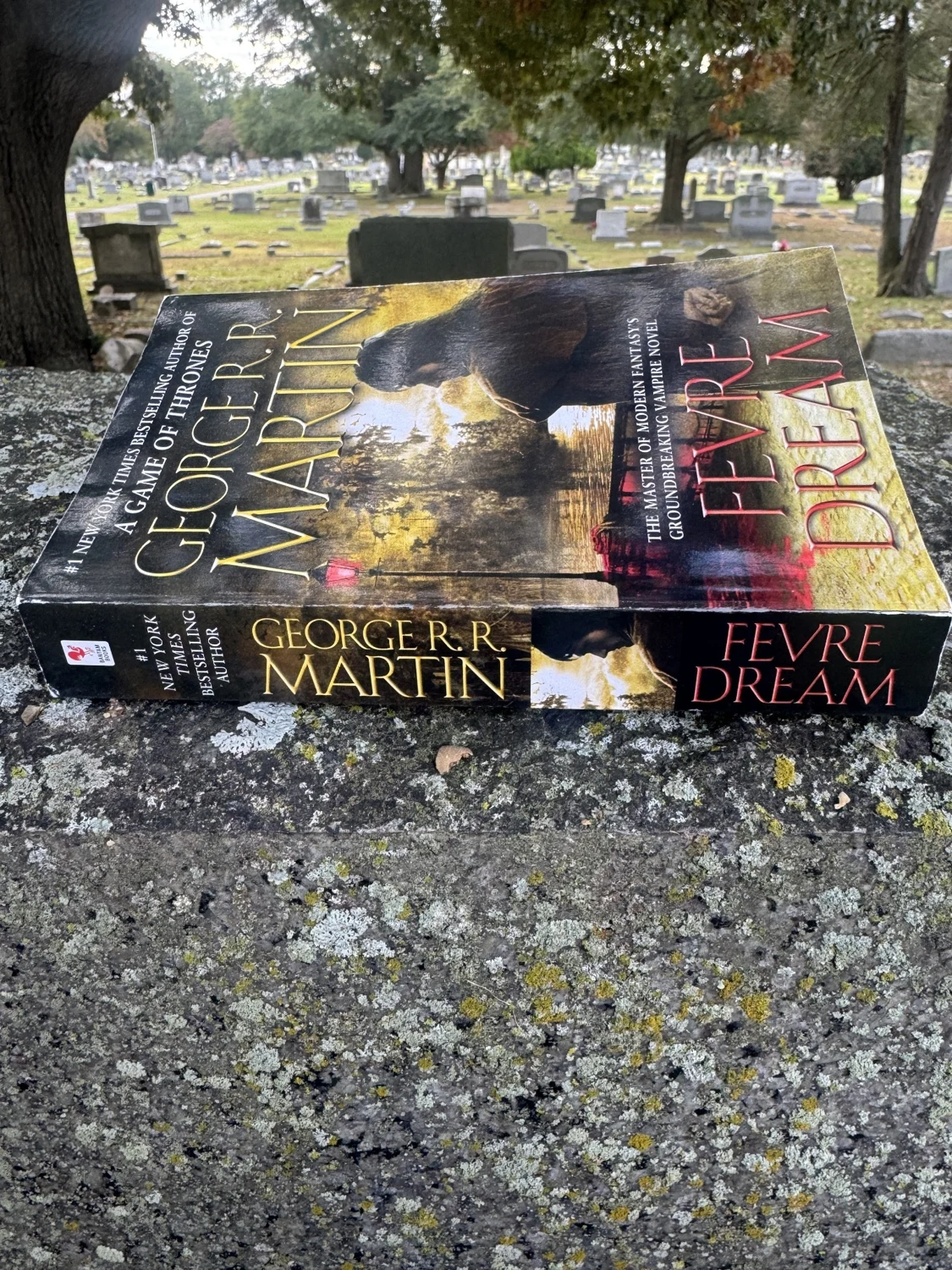
Finally, there's Fevre Dream by George R. R. Martin. I'd read all the Game of Thrones books, and while waiting for the series to end, which I'm still doing, I stumbled across this one, and it's quite different from Martin's better-known fantasy work.
Fevre Dream takes place along the Mississippi River in the 1850s. Abner Marsh is a struggling steamboat captain who receives an unusual offer from a mysterious and wealthy stranger named Joshua York. Together, they'll build a magnificent new riverboat. Marsh gets the chance to captain the kind of vessel he's always dreamed of, and York gets a way to travel the Mississippi.
Of course, York has some peculiar habits. He keeps strange company, avoids the sunlight, and has his own reasons for wanting to travel the river, and since we're talking about vampire books, you can probably guess where this is going.
What I enjoyed about Fevre Dream was how different the setting felt. Instead of castles in Transylvania or ancient vampires wandering through Paris, we have steamboats, river towns, and the American South. There's something particularly effective about placing vampire mythology against that backdrop.
But underneath the vampires and riverboats, there's also the relationship between Marsh and York. They begin as business partners, each with his own reasons for entering the arrangement. Over time, however, their relationship develops into something more meaningful. By the end, I felt they had genuine respect for each other, and perhaps even friendship, and that stayed with me more than the supernatural elements.
It's a strange book. It's fun, it's atmospheric, and it's quite unlike anything else I'd read from Martin. When I finished it, I remember sitting there thinking, What did I just read? The whole thing felt like a fever dream. So I suppose it was perfectly titled.
What Makes a Monster?
Looking back at these books, what strikes me is how much the vampire has changed while remaining fundamentally recognizable. Stoker gave us the monster lurking outside the door, waiting for an invitation. Rice took us inside that monster's mind and asked us to understand its loneliness, its desires, and its guilt. Matheson turned the entire idea around, making the last human the monster in a world that had moved on without him. Sapkowski gave us Regis, a vampire who understands his nature but refuses to let it determine his character. Even Fevre Dream, beneath its supernatural horror, finds room for respect and friendship between two very different beings.
I suppose what I find interesting is that the vampire has become less about what a monster is and more about what a monster does. Immortality, supernatural strength, and an appetite for blood might make someone dangerous. But they don't necessarily tell us whether that character is good or evil.
Maybe that's why vampire stories keep working. The monsters have changed, but the questions they raise about humanity haven't. Sometimes the most frightening creature is the one standing outside the door. Sometimes it's the one we've invited inside. Sometimes it's the person holding the stake.
Photographs © Oak Grove Books. Book cover artwork and designs remain the property of their respective copyright holders.
More from What I’m Reading →